
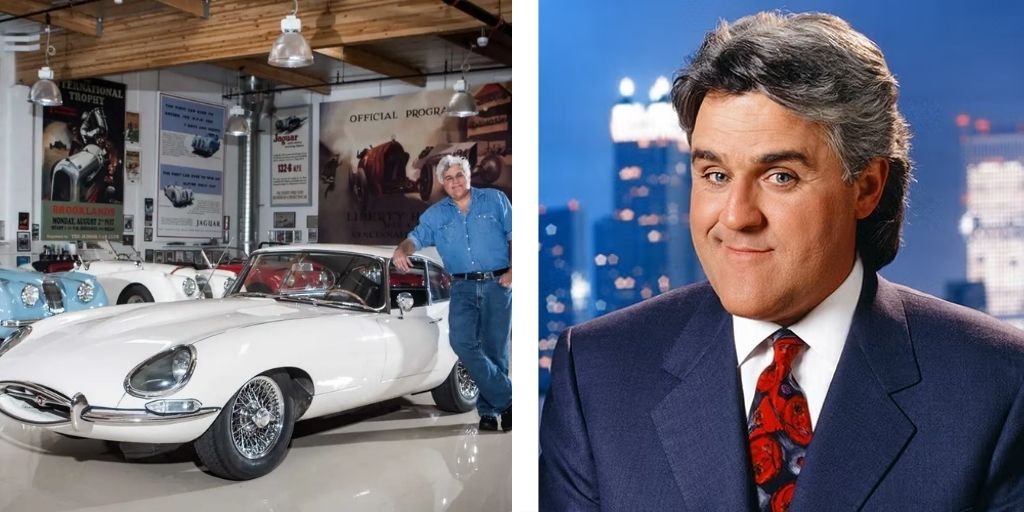

Jay Leno is widely known for his comedy, television career, and love of automobiles. Over the years, he has built one of the most famous private vehicle collections in the world, featuring everything from rare vintage automobiles to powerful modern supercars. His collection is not simply a gathering of expensive vehicles; it reflects decades of curiosity, mechanical knowledge, and genuine passion for automotive history.
The estimated value of his garage attracts attention because it contains vehicles that are difficult to find anywhere else. But how much is this remarkable collection really worth? Understanding its value means looking beyond expensive price tags to explore rarity, restoration, engineering, historical importance, and the stories behind the machines.
Jay Leno’s Car Collection Value and Estimated Worth
Jay Leno’s automotive collection is frequently estimated to be worth tens of millions of dollars, with some public estimates placing its value around $50 million to $100 million or more. However, there is no publicly verified, complete inventory with an official total valuation. The actual figure could be higher or lower depending on which vehicles are included and how individual examples are valued.
Why is it so difficult to calculate the exact amount? The collection includes automobiles from different periods, manufacturers, and levels of rarity. A common classic car in excellent condition might sell for a relatively modest price, while an exceptionally rare automobile with historical significance could be worth millions.
Market prices also change over time. Collectors’ interests, auction results, restoration quality, and the availability of similar vehicles can all affect a car’s value. A vehicle that was highly desirable a decade ago may attract a different price today.
Another important point is that the value of a private collection is not the same as its owner’s personal wealth. Jay Leno has earned money through television, comedy, live performances, and other professional activities. His automobiles represent a substantial collection of assets, but their estimated value should not be confused with his complete net worth.
For enthusiasts, the more interesting question may be what makes these vehicles so valuable. The answer involves far more than their appearance or performance.
How Jay Leno Built His Remarkable Garage
Jay Leno did not become a respected car collector simply by purchasing expensive vehicles. His interest in automobiles developed over many years, beginning long before he became a household name through television.
As his entertainment career grew, he gained the financial freedom to pursue his automotive interests more extensively. Rather than concentrating exclusively on fashionable luxury cars, he developed an interest in unusual engineering, historic vehicles, and machines that represented important moments in automotive development.
His collection reflects a wide range of tastes. Some vehicles are elegant examples of early automotive design, while others demonstrate the incredible performance capabilities of modern engineering. There are also machines whose appeal comes from their unusual construction or the challenges involved in keeping them operational.
Leno’s approach differs from that of collectors who purchase vehicles mainly to display them or sell them for a profit. He is well known for driving many of his automobiles and discussing how they work. This practical interest gives his collection a distinctive character.
Imagine a library containing books from every major period of history. Each book tells a different story, and together they create a broader picture of human progress. Leno’s garage serves a similar purpose for transportation, preserving examples of how people have designed, built, and improved automobiles.
His collection has also benefited from public exposure through his automotive videos and television projects. These appearances allow audiences to discover machines they might never encounter on ordinary roads.
The Rare Classic Cars That Add Extraordinary Value
Classic automobiles are among the most fascinating parts of any major collection. Their value often depends on age, rarity, condition, originality, and the reputation of the manufacturer.
Early automobiles can be particularly desirable because they represent the foundations of modern transportation. Before cars became familiar household products, manufacturers experimented with different engines, steering systems, body designs, and mechanical layouts. Surviving examples provide a direct connection to that experimental period.
Jay Leno has shown interest in vehicles from many stages of automotive history. His garage includes unusual and historically significant machines, making it difficult to describe the collection through a single category.
Why classic vehicles become expensive
Several factors help determine the market value of a vintage automobile:
- Rarity: Cars produced in very limited numbers may attract serious collectors.
- Historical importance: Vehicles connected to important technological developments can have special significance.
- Original condition: Matching components and authentic features may increase desirability.
- Restoration quality: Careful restoration can improve condition, although originality and restoration standards matter.
- Provenance: A documented ownership history can help establish authenticity and historical interest.
- Demand: Interest from collectors can push prices higher or lower.
Age alone does not guarantee a high price. A relatively common old vehicle may be worth less than a younger model with limited production and strong collector demand.
This distinction helps explain why the total value of a major collection cannot be calculated simply by counting its cars and multiplying that number by an average price. Every vehicle has its own story, condition, and place in the market.
For Leno, a classic automobile’s importance may also come from the engineering choices that make it different from modern vehicles. That interest can be just as compelling as its financial value.
Supercars and High-Performance Machines
Alongside historic vehicles, Jay Leno is associated with high-performance automobiles that showcase speed, design, and advanced engineering.
Supercars often command high prices because manufacturers produce them in limited numbers, use specialized materials, and invest heavily in development. Their engines, suspension systems, braking technology, and aerodynamic features can distinguish them from ordinary production vehicles.
A powerful engine is only one part of the equation. Manufacturers may spend years improving how a car handles, accelerates, and remains stable at high speeds. In some cases, the resulting vehicle becomes a milestone in automotive engineering.
Collectors are often drawn to supercars that represent a particular technological era. A model that introduced an important engineering innovation may become increasingly desirable as newer vehicles replace it.
What makes a supercar valuable?
Limited production is one major factor. If only a small number of vehicles were built, collectors may compete for the few examples that become available.
Brand reputation matters as well. Manufacturers with a long history of motorsport success, distinctive styling, or technical innovation often attract devoted followers.
Condition is equally important. A well-maintained vehicle with complete service records may be more appealing than a neglected example requiring expensive repairs. Original components can also influence collector interest.
However, not every expensive performance car automatically becomes a valuable classic. Some models depreciate significantly, while others appreciate because they are rare or historically important.
Leno’s broader automotive interests demonstrate that performance is only one part of collecting. A car can be extraordinary because of its speed, but it can also be remarkable because of the engineering ideas it introduced or the story it represents.
Unique Cars and Unusual Engineering Designs
One of the most interesting aspects of Jay Leno’s garage is its variety. Not every valuable automobile has the familiar shape of a luxury sedan or a modern sports car.
Some vehicles attract attention because their designers approached transportation in unusual ways. They may have unconventional engines, distinctive body structures, experimental technologies, or mechanical solutions that were eventually abandoned.
These vehicles can be especially interesting to collectors because they preserve ideas that might otherwise disappear from public memory.
The appeal of engineering experiments
Automotive history is full of bold experiments. Manufacturers have explored different engine layouts, alternative fuels, turbine power, unusual steering arrangements, and unconventional body designs.
Some experiments became successful technologies. Others remained limited to prototypes or small production runs. Even unsuccessful ideas can be historically important because they show how engineers tried to solve difficult problems.
An unusual automobile may be valuable because very few examples survive. Its mechanical complexity can also make restoration challenging, particularly when replacement parts are no longer available.
For a collector who enjoys understanding machinery, these challenges can become part of the attraction. Discovering how an unusual engine operates or how a rare mechanism was designed can provide a level of satisfaction that a conventional luxury vehicle may not offer.
This is one reason Leno’s automotive interests appeal to audiences beyond traditional car enthusiasts. His garage demonstrates that automobiles are not just products; they are also examples of creative problem-solving.
The financial value of these unusual vehicles varies considerably. Some attract substantial interest at specialist auctions, while others are more important for historical or educational reasons than for their resale potential.
The Value of Rare Engines and Historic Technology
A car’s engine can play a major role in its appeal, particularly when it uses an unusual design or represents a significant engineering achievement.
Early automotive engines were often simple by modern standards, but they required considerable ingenuity. Engineers had to overcome limitations involving fuel delivery, ignition, cooling, lubrication, and mechanical reliability.
Over time, manufacturers introduced more advanced systems that improved performance, efficiency, and durability. The development of engines provides a fascinating way to understand the broader history of industrial technology.
Jay Leno’s interest in mechanical details is an important part of his public automotive identity. Discussions about his vehicles often extend beyond exterior styling to include how their engines work and what makes their designs distinctive.
Why engine design affects collector interest
An engine may contribute to a car’s value when it is original to the vehicle, rare, historically important, or closely associated with a desirable model.
Authenticity is especially important for serious collectors. Replacing an original engine with a different unit may reduce the value of some historically significant automobiles, although the effect depends on the model and the quality of the work.
Mechanical condition also matters. A vehicle with a functioning, well-maintained engine may be easier to enjoy and demonstrate than one that needs a complete rebuild.
Nevertheless, an engine’s financial value should not be considered separately from the whole vehicle. The chassis, body, transmission, documentation, and overall condition all contribute to the automobile’s market position.
For enthusiasts, the greatest attraction may be the opportunity to see engineering history in action. Hearing a historic engine run can make the past feel surprisingly close.
Restoration, Maintenance, and the Cost of Ownership
A collection of valuable automobiles requires more than an initial purchase budget. Owners must also consider maintenance, storage, specialist labor, insurance, and the availability of replacement parts.
These costs can be particularly high when vehicles are old, rare, or mechanically complex. A modern car may be serviced using widely available components, while a historic model could require a specialist to reproduce a part that has not been manufactured for decades.
Restoration can involve many stages. Technicians may need to repair the body, rebuild the engine, restore the interior, inspect the electrical system, and address corrosion. The work must be planned carefully to preserve the vehicle’s character and, where appropriate, its originality.
Does restoration always increase a car’s value?
Not necessarily. High-quality restoration can make a vehicle more attractive and usable, but the cost of restoration does not automatically translate into an equivalent increase in market value.
For example, spending a large amount on a relatively common automobile may not make financial sense if comparable vehicles sell for much less. By contrast, restoring a rare model with strong collector demand may be more worthwhile.
Originality also complicates the decision. Some collectors prefer a carefully preserved vehicle with authentic signs of age, while others favor a fully restored example that looks close to new.
Maintenance is an ongoing responsibility. Fluids, tires, seals, batteries, cooling systems, and other components may require attention even when a car is driven infrequently. Vehicles that remain unused for long periods can develop problems of their own.
Leno’s public interest in driving and maintaining automobiles highlights an important point: a collection is not valuable solely because its vehicles sit in a garage. Keeping them operational helps preserve their mechanical character and allows their owners to enjoy what makes them special.
The McLaren F1 and Other Million-Dollar Possibilities
The McLaren F1 is one of the most recognizable high-value cars associated with Jay Leno. Introduced in the 1990s, it became famous for its lightweight construction, naturally aspirated V12 engine, exceptional performance, and unusual three-seat cabin with the driver sitting in the center.
Leno has discussed buying his McLaren F1 when it was far less expensive than the prices associated with the model today. In an interview with Auto Express, he recalled paying around $800,000 and later receiving an offer of approximately $17.5 million. That account illustrates how dramatically the market for certain rare supercars can change.
The example also explains why a small number of vehicles can make a major difference to a collector’s overall valuation. If one automobile is worth several million dollars, its changing market price can influence the estimated value of the entire collection.
Why is the McLaren F1 so desirable?
The F1 combined advanced materials, careful weight management, and a remarkable engine in a road-going design. Its limited production and lasting reputation have made it a significant vehicle in modern automotive history.
The center driving position gives the car an unusual layout, while its engineering philosophy emphasizes a direct connection between the driver and the machine. These features distinguish it from many later supercars, which increasingly incorporated hybrid systems, electronic driving aids, and other advanced technologies.
The McLaren F1 is not the only vehicle that can attract substantial interest. Rare Ferraris, exceptional prewar automobiles, limited-production sports cars, and historically important machines can also command very high prices.
Still, it is important not to assume that every vehicle in Leno’s garage is worth millions. The collection contains a broad range of automobiles, and their values differ considerably. A few expensive examples can raise the overall total, but the rest of the collection must also be considered.
How the Collection Compares With Other Famous Garages
Jay Leno’s garage is often discussed alongside the collections of other wealthy automotive enthusiasts, collectors, and business leaders. Yet comparisons can be difficult because there is no single standard for calculating a private collection’s worth.
Some collectors focus on rare European sports cars. Others prefer American muscle cars, historic racing vehicles, vintage luxury automobiles, or vehicles that demonstrate unusual engineering.
Leno’s collection stands out because of its broad range. His interests include early automobiles, unusual mechanical designs, American classics, and modern performance cars. This variety gives his garage a different character from collections built around one manufacturer or a narrow group of models.
Quantity versus quality
A collection with hundreds of vehicles is not automatically more valuable than a smaller collection of exceptionally rare automobiles. One historically important car can be worth more than dozens of ordinary classics combined.
The condition of each vehicle also matters. A large collection may include cars that require restoration, while a smaller one might consist of carefully maintained examples with complete documentation.
Public visibility creates another difference. Leno regularly shares automotive content through his media projects, allowing enthusiasts to learn about individual vehicles and the stories behind them. His garage is therefore known not only as a collection of possessions but also as a platform for automotive education.
His reputation among enthusiasts was further recognized in 2026 when the Fédération Internationale des Véhicules Anciens inducted him into its Heritage Hall of Fame, highlighting his contribution to historic vehicle preservation and public education.
This recognition reinforces the idea that a collection can have cultural significance beyond its financial value. Preserving rare vehicles, sharing their stories, and keeping historic engineering visible to new generations are meaningful contributions in their own right.
Does Jay Leno’s Collection Increase in Value Over Time?
It is tempting to assume that rare cars always become more valuable as they grow older. In reality, the collector car market is more complicated.
Certain vehicles appreciate significantly because they are rare, historically important, or highly sought after. Others lose value as buyer preferences change, maintenance costs rise, or newer models become more attractive.
Even famous automobiles can experience periods when their prices fall. Economic conditions, interest rates, collector demographics, and the availability of competing vehicles can all influence demand.
Factors that influence future value
- Limited production: A genuinely rare model may attract more competition among buyers.
- Historical significance: Cars connected to major technological achievements or racing success can retain strong appeal.
- Authenticity: Original components and reliable documentation can help establish a vehicle’s identity.
- Maintenance history: Evidence of proper care can improve buyer confidence.
- Changing tastes: Younger collectors may prefer different models or technologies from earlier generations.
- Economic conditions: Expensive collector cars are discretionary purchases, so broader financial conditions can affect demand.
A vehicle’s value can also depend on its particular specification. Two examples of the same model may sell for different amounts because of mileage, factory options, ownership history, restoration quality, and originality.
Leno’s collection should therefore not be treated as a guaranteed investment portfolio. Some cars may appreciate, while others may remain stable or decline in value. Insurance, storage, repairs, and restoration can also reduce the financial return an owner receives.
For a passionate collector, however, financial appreciation may not be the main objective. The pleasure of driving a rare automobile, understanding its engineering, and preserving its history can be valuable even when the market price does not rise.
The Role of Jay Leno’s Garage in Automotive Preservation
Jay Leno’s garage has become a recognizable part of automotive media. Through videos, vehicle reviews, interviews, and demonstrations, Leno introduces viewers to cars that many people would never have an opportunity to examine closely.
The educational aspect is particularly important for older vehicles. Historic automobiles can be difficult to understand when they are displayed only as static exhibits. Seeing an engine start, hearing its mechanical sounds, or watching a vehicle move helps explain how it was designed to work.
His public platform also brings attention to the people who preserve automotive history. Mechanics, restorers, engineers, designers, and specialist craftsmen all contribute to keeping older vehicles operational.
Why preservation matters
An automobile is a physical record of the technology and manufacturing methods of its time. It can reveal how materials were used, how engines were constructed, and how designers responded to the needs of drivers.
Preservation is not always simple. Parts may be scarce, technical information may be incomplete, and repairs can require specialized knowledge. Some vehicles need careful conservation to prevent further deterioration, while others can be maintained through regular use.
Leno’s interest in driving his vehicles helps illustrate an important distinction between owning a car and actively preserving it. A vehicle that remains operational can demonstrate its engineering qualities in a way that photographs alone cannot.
His garage also shows how storytelling can make technical subjects accessible. Rather than discussing only horsepower, speed, or market prices, a good automotive presentation explains why a vehicle was built, what made it unusual, and how it fits into the history of transportation.
For readers curious about his collection’s value, this educational role provides another way to measure its importance. The cars are valuable assets, but they also help preserve knowledge about engineering and design.
What the Estimated Total Really Tells Us
When people search for the value of Jay Leno’s cars, they often expect a single, definitive figure. But an estimated total is only useful when the assumptions behind it are understood.
A valuation might include only automobiles, or it might combine cars and motorcycles. It might use current market estimates, historical purchase prices, insurance values, or hypothetical auction results. Each method can produce a different number.
For example, an insurance valuation is designed to help establish appropriate coverage. An auction estimate attempts to predict what a vehicle might sell for under particular conditions. A private sale can produce a different result, especially if the buyer and seller have specific reasons for agreeing on a price.
A practical way to interpret the figures
The most responsible approach is to describe Leno’s collection as an exceptionally valuable private automotive collection while treating widely repeated totals as estimates rather than confirmed financial records.
Public sources have reported figures around $150 million for his cars and motorcycles, although such claims are not equivalent to a recent independent appraisal of every vehicle.
That estimate is higher than some commonly repeated figures. The difference illustrates why articles about celebrity car collections should explain their uncertainty instead of presenting one number as unquestionable fact.
The collection’s actual value could change as individual vehicles are bought, sold, restored, or reassessed. Without a complete, current inventory and reliable valuations for every vehicle, a precise total cannot be independently confirmed.
For enthusiasts, the central point remains clear: Leno’s garage brings together rare, historically meaningful, and technically fascinating vehicles on a remarkable scale. Its importance cannot be captured by a price tag alone.
Conclusion: More Than an Expensive Car Collection
Jay Leno’s garage represents decades of interest in automobiles, engineering, restoration, and transportation history. Its estimated financial value is substantial, but the exact total remains uncertain because a complete, independently verified valuation is not publicly available.
Rare supercars, vintage classics, unusual engineering projects, and historically significant vehicles all contribute to the collection’s appeal. The McLaren F1 is an especially notable example of how a vehicle’s reputation and scarcity can influence its market price over time.
Ultimately, Leno’s collection is more than a display of wealth. It is a living archive of automotive progress, made more meaningful by his efforts to drive, maintain, and share the machines with the public. For anyone interested in cars, that combination of financial value, mechanical curiosity, and historical preservation is what makes his garage truly extraordinary.
Frequently Asked Questions
What is Jay Leno’s car collection worth?
The value is not officially confirmed. Public estimates vary, with some reports placing his combined cars and motorcycles around $150 million. Other estimates are lower, so any figure should be treated as an approximation rather than an audited valuation.
How many cars does Jay Leno own?
The number varies across published reports and may change over time. A widely cited Los Angeles Times feature reported that his collection included approximately 200 cars and motorcycles in 2014. That historical figure should not be treated as a current count of cars alone.
What is one of the most valuable cars in Jay Leno’s collection?
His McLaren F1 is among the best-known high-value vehicles associated with his garage. Leno has publicly discussed its purchase price and a later offer of approximately $17.5 million, illustrating the model’s significant rise in collector interest.
Does Jay Leno drive the cars in his collection?
Yes. Leno is well known for driving many of his vehicles rather than keeping them solely for display. His automotive media projects regularly feature cars being started, tested, driven, and discussed in detail.
Why are Jay Leno’s cars so valuable?
Their value comes from a combination of rarity, condition, engineering, historical importance, manufacturer reputation, and collector demand. Some vehicles are valuable because they are exceptionally rare, while others are significant because they represent important developments in automotive design or performance.