

Introduction
George Washington, the first president of the United States, remains one of the most important figures in American history. He helped lead the American colonies to independence, served as the nation’s first president, and established traditions that influenced future generations of leaders. Yet, despite his remarkable achievements, his life eventually came to an end in December 1799.
The story of his final days is both moving and historically significant. Washington died suddenly after developing a severe throat illness at his home, Mount Vernon, in Virginia. His death shocked the young nation and raised questions about his medical treatment, personal strength, and lasting influence.
What happened during his final hours? What caused his death, and how did Americans respond to the loss of their first president? By exploring his last day, the medical practices of the eighteenth century, and the legacy he left behind, we can better understand why his death became a defining moment in American history.
1. Who Was George Washington?
George Washington was born on February 22, 1732, in Westmoreland County, Virginia, when the region was part of Britain’s North American colonies. He grew up in a farming family and developed an early interest in land surveying, agriculture, and military service.
Washington became widely known during the French and Indian War, where he gained valuable experience as a military officer. His leadership later helped him become commander in chief of the Continental Army during the American Revolutionary War.
Between 1775 and 1783, he guided American forces through a difficult struggle against Great Britain. The Continental Army faced shortages of food, clothing, money, and weapons, yet Washington helped maintain the fight for independence.
After the war, he returned to Mount Vernon, his estate in Virginia. However, his public service was not over. In 1789, he became the first president of the United States, serving two terms before leaving office in 1797.
Washington’s decision to step away from the presidency helped establish the principle that political power should not belong permanently to one individual. By the time of his death, he was widely respected as a military leader, national symbol, and founding figure.
2. When and Where Did George Washington Die?
George Washington died on December 14, 1799, at approximately 10 p.m. He was 67 years old.
He died at Mount Vernon, his beloved estate overlooking the Potomac River in Virginia. Washington had spent much of his adult life connected to this property, which served as his home, agricultural operation, and personal retreat from public responsibilities.
His death came less than three years after he completed his second presidential term. Although he was no longer president, he remained an influential public figure whose opinions carried considerable weight.
The timing made the loss particularly significant. The United States was still a relatively young country, having declared independence in 1776 and adopted its Constitution in 1787. Washington had provided continuity during the nation’s early development, and many Americans regarded him as a source of stability.
His death therefore represented more than the passing of an elderly statesman. It marked the loss of a leader whose reputation had become closely connected with the survival and identity of the new republic.
3. What Happened on George Washington’s Last Day
Washington’s final illness began on December 12, 1799, after he spent several hours outdoors inspecting his estate. The weather was cold, and he reportedly returned home with his clothes and hair damp from the conditions.
The following morning, he developed a sore throat and began experiencing increasing discomfort. At first, the illness did not necessarily appear unusual. In an era before modern medicine, however, even a seemingly ordinary throat infection could become dangerous.
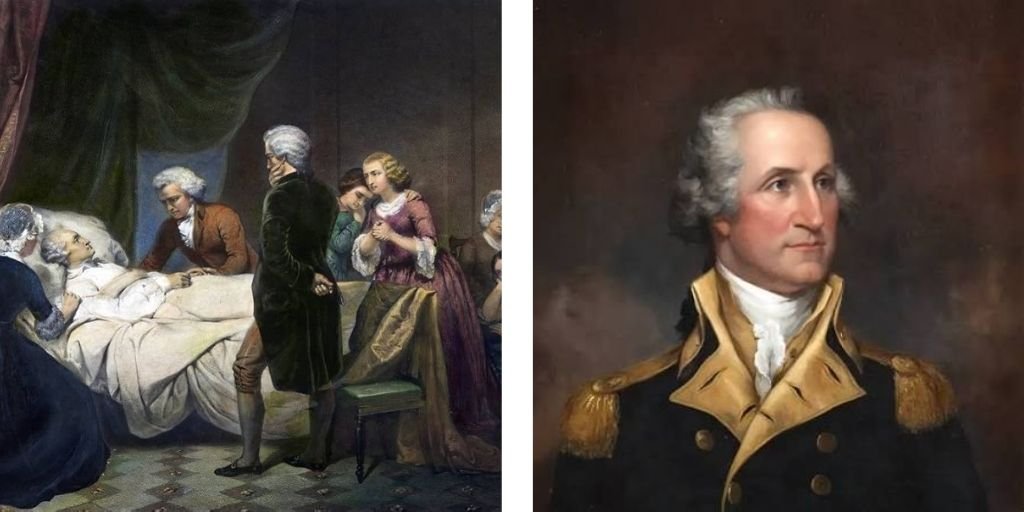
On December 14, Washington’s condition worsened considerably. He experienced difficulty breathing and swallowing, and his voice became increasingly weak. His family and household staff recognized that something serious was happening.
Washington’s wife, Martha Washington, remained close to him during this frightening period. His doctors were called to provide treatment, but the available medical knowledge offered few effective ways to manage a rapidly progressing throat emergency.
Despite his discomfort, Washington reportedly remained composed and concerned about those around him. He understood that his condition was serious and eventually began preparing for the possibility of death.
His final instructions
As his strength declined, Washington expressed concern about his burial arrangements and the handling of his affairs. He reportedly asked that his body not be placed in the tomb immediately, reflecting concerns about premature burial that existed during that period.
He also communicated with his household staff and physician, showing the same practical attitude that had characterized much of his public life.
By late evening, Washington’s breathing had become extremely difficult. He died at approximately 10 p.m., surrounded by people attending to him.
His final hours were brief but distressing. The illness progressed with remarkable speed, turning what may initially have seemed like a manageable health problem into a fatal emergency.
4. What Caused George Washington’s Death?
The commonly accepted historical explanation is that Washington died from an acute throat illness, often described as acute epiglottitis or a severe throat infection. However, the exact diagnosis remains uncertain because doctors in 1799 did not have modern diagnostic equipment or laboratory testing.
Historical accounts describe severe throat inflammation, difficulty swallowing, changes in his voice, and increasing breathing problems. These symptoms suggest that swelling in his upper airway may have played a major role.
Understanding the possible medical cause
The epiglottis is a small flap of tissue that helps prevent food and liquid from entering the windpipe during swallowing. When this tissue becomes severely inflamed, it can swell and restrict the passage of air.
In modern medicine, acute epiglottitis is recognized as a potentially life-threatening condition. Depending on its cause and severity, it may require urgent airway management, antibiotics, and hospital-level monitoring.
Washington’s reported symptoms are consistent with a serious upper-airway condition, but it would be inaccurate to claim that his death has been definitively proven to have resulted from epiglottitis.
Other possibilities have been discussed by historians and medical researchers, including severe bacterial throat infections and other causes of airway obstruction.
Could modern medicine have saved him?
It is possible that modern emergency care could have improved Washington’s chances of survival, but no one can know the outcome with certainty.
Today, doctors can assess airway swelling, provide oxygen when appropriate, administer treatments for infection, and secure a patient’s airway when breathing is threatened.
In 1799, these options were extremely limited. Doctors relied heavily on physical examinations, observation, and treatments based on the medical theories of their time.
Washington’s death illustrates how dangerous sudden illness could be before the development of modern emergency medicine. Even a person with access to respected physicians and substantial resources could face a condition that medicine was not equipped to treat effectively.
5. How Did Doctors Treat George Washington?
One of the most discussed aspects of Washington’s death is the treatment he received during his final hours.
Three physicians were involved in his care: Dr. James Craik, Dr. Gustavus Richard Brown, and Dr. Elisha Cullen Dick. They attempted to relieve his symptoms using the medical practices available at the time.
Their decisions reflected eighteenth-century medical beliefs, which differed significantly from modern scientific medicine.
Bloodletting and its dangers
The doctors performed bloodletting, a common medical practice intended to remove blood from the body. Many physicians believed that reducing the amount of blood could restore balance and help treat illness.
Washington reportedly lost a substantial amount of blood during his treatment, commonly estimated in historical accounts at around five pints in total. The precise amount and its contribution to his death remain matters of historical discussion.
Today, such extensive blood loss would be a serious concern, particularly for someone already struggling to breathe.
Bloodletting could reduce circulating blood volume and contribute to weakness, low blood pressure, and inadequate oxygen delivery to the body’s tissues. It would not treat swelling of the upper airway.
Other treatments used
Washington also received treatments intended to soothe his throat and relieve his symptoms. Accounts of his care describe the use of gargles, local applications, and other remedies typical of the period.
These interventions did not stop the illness from progressing.
Dr. Elisha Cullen Dick is often associated with opposition to further bloodletting, although the precise details of the physicians’ discussions are reconstructed from historical accounts. His position is frequently discussed because it highlights the uncertainty surrounding medical decisions at the time.
It is important to remember that Washington’s physicians were working within the limits of their training and the accepted medical knowledge of their era. Their treatment choices may look alarming today, but bloodletting was widely practiced and was not then understood in the same way it is now.
Washington’s case has since become an example of how medical beliefs can change as scientific evidence improves. Treatments once considered standard can later be shown to offer little benefit or even cause harm.
6. George Washington’s Final Words and His State of Mind
Washington’s final words are frequently repeated because they reflect his concern for a peaceful and orderly death.
Historical accounts commonly attribute to him the words, “Tis well.” He is also reported to have said, “I die hard, but I am not afraid to go.”
These quotations are associated with recollections of his final hours, although surviving accounts do not always agree on the exact wording or sequence of his statements.
As his condition deteriorated, Washington reportedly discussed his burial arrangements and expressed a desire to be buried properly rather than immediately after death. His concerns reflected the burial customs and anxieties of the eighteenth century.
His final moments are often described as calm in spirit, despite his physical suffering. He had spent decades facing difficult circumstances, including war, political disagreement, and the responsibilities of leading a new nation.
That does not mean he felt no fear or discomfort. Rather, the historical picture suggests that he tried to approach his final hours with dignity and practical concern for his family and household.
His death also reminds us that historical leaders were human beings. Behind the portraits, monuments, and famous speeches was an older man experiencing pain and uncertainty, surrounded by people who could do little to stop his illness.
7. How Did Martha Washington and His Family Respond?
Martha Washington had shared much of her life with George Washington, including the Revolutionary War, his presidency, and their years at Mount Vernon.
His death brought their long partnership to an end. Although public accounts often emphasize Washington’s political and military achievements, his passing was also a deeply personal loss for his family.
Martha was present during his final illness, and historical accounts describe her grief following his death. She faced the difficult task of mourning her husband while managing the immediate responsibilities that followed the death of such a prominent figure.
The Washington household also included relatives, workers, and enslaved people whose lives were connected to the estate. Their experiences differed greatly depending on their relationships to the Washington family and their positions within the household.
Washington’s death therefore affected more than one household. News of his passing traveled beyond Virginia, reaching political leaders and ordinary citizens across the country.
His burial arrangements were made according to his wishes and family traditions. He was eventually laid to rest in the family tomb at Mount Vernon, the place he had regarded as home for much of his life.
Martha Washington continued to live at Mount Vernon after his death. She died in 1802 and was buried beside him.
Their shared resting place became an important historical site, visited by generations of Americans interested in the lives of the nation’s first presidential couple.
8. How Did America React to George Washington’s Death?
News of Washington’s death spread throughout the United States, prompting public mourning and tributes from political leaders, military officers, and ordinary citizens.
For many Americans, Washington represented the success of the Revolution and the stability of the new republic. His leadership had helped guide the country through its earliest and most uncertain years.
Congress formally honored his memory, and public ceremonies were held in different communities. Military and civic organizations participated in commemorations, while newspapers published tributes reflecting his importance to the nation.
A national period of mourning
Washington’s passing encouraged Americans to express their gratitude for his service. Memorial sermons, speeches, and funeral observances became ways for communities to reflect on his achievements.
The mourning was not simply about losing a former president. It was also about losing a figure whose reputation had helped unite people with different political interests.
The United States was still developing its national identity. Washington’s character, military reputation, and willingness to leave the presidency peacefully had made him an example of public service for many citizens.
A response from political leaders
Washington’s former colleagues and political successors recognized the scale of the loss. John Adams, who was president at the time, and other national leaders understood that Washington’s death marked the end of an important chapter in the country’s founding generation.
His legacy also influenced later political traditions, including the idea that presidents should serve the nation rather than seek permanent personal power.
In this sense, the mourning that followed his death helped transform Washington from a living national leader into a lasting symbol of American independence and republican government.
9. Where Was George Washington Buried?
George Washington was buried at Mount Vernon, his estate in Virginia. His final resting place remains one of the most important historical locations associated with the founding of the United States.
Washington had expressed wishes concerning his burial, and his family arranged for him to be laid to rest in the existing family tomb. The burial took place on December 18, 1799, four days after his death.
The ceremony was attended by people connected to his family, estate, and local community. Military honors and religious observances reflected his position as a celebrated Revolutionary War commander and former president.
The Old Tomb and the New Tomb
Washington’s original burial place was a small brick tomb on the Mount Vernon estate. Over time, concerns developed about the condition of the old tomb and the need to protect the remains of Washington and his family.
In 1831, Washington’s remains were transferred to a new tomb at Mount Vernon, following earlier plans for a more suitable burial place. The new tomb included separate sarcophagi for George and Martha Washington.
The tomb remains a central feature of the historic estate. Visitors can learn about Washington’s life, see the landscape he knew, and explore the place where his public career eventually gave way to private life.
Mount Vernon is more than a burial site. It provides insight into eighteenth-century plantation life, agriculture, architecture, and the complex history of slavery in early America.
Washington’s connection to the estate also gives his death a particular historical meaning. He did not die in a distant battlefield or while serving as president. He died at home, in the place he had repeatedly returned to after periods of public duty.
10. George Washington’s Legacy After His Death
George Washington’s death did not diminish his importance. In many ways, it strengthened his place in American memory.
His achievements included commanding the Continental Army, presiding over the Constitutional Convention, and serving as the first president of the United States. His decision to leave office after two terms also established an influential example of restraint in political leadership.
However, his legacy is more complex than a story of military success and national unity alone.
A model of presidential leadership
Washington helped define the role of the American presidency. The Constitution established the office, but Washington’s decisions helped shape how it would function in practice.
He established precedents for presidential conduct, worked with advisers, and navigated difficult political disagreements. By stepping down voluntarily, he demonstrated that the presidency was not intended to be a lifetime position.
His example influenced later generations of political leaders and remains part of discussions about democratic government.
His complicated historical legacy
Washington is also remembered in connection with slavery. He enslaved people at Mount Vernon throughout much of his life, and the labor of enslaved individuals contributed to the operation of his estate.
Although his views and actions regarding slavery changed in certain respects over time, he did not free all the people he enslaved during his lifetime. His will provided for the eventual emancipation of the people he personally owned, subject to the conditions specified in the document, after Martha Washington’s death or sooner at her discretion.
This part of his life is essential to a complete historical understanding. His leadership in the struggle for American liberty existed alongside his participation in an institution that denied liberty to others.
Recognizing this contradiction does not require ignoring his achievements. Instead, it allows us to examine the founding era more honestly, including its accomplishments, inequalities, and unresolved conflicts.
Why his death still matters today
Washington’s final illness offers another lesson: even the most influential people are vulnerable to circumstances beyond their control.
His death reminds us how dramatically medical knowledge has changed. It also illustrates how the passing of a respected leader can affect a nation’s sense of identity.
Imagine the United States in 1799 as a young tree with roots still developing. Washington had helped it survive its earliest storms, but the country would need to grow stronger without relying on him.
His death forced Americans to continue building their political institutions without the presence of the individual who had guided so much of their early development.
That transition is part of what makes his final days historically significant. Washington’s life helped establish the republic, while his death challenged it to continue without its most celebrated founding leader.
Conclusion: Remembering George Washington’s Final Hours
George Washington died on December 14, 1799, at Mount Vernon, aged 67. His final illness developed rapidly, causing severe throat symptoms and breathing difficulties that the medicine of his time could not effectively treat. The exact medical cause remains uncertain, but the historical accounts show how vulnerable even a prominent leader was to a sudden medical emergency.
His death prompted widespread mourning throughout the United States and marked the loss of a figure closely associated with the nation’s independence and early government. His burial at Mount Vernon connected his final resting place with the home he had cherished.
Today, Washington is remembered for his military leadership, presidency, and influence on American political traditions. His legacy also includes difficult questions about slavery and freedom. By considering both his achievements and his contradictions, we gain a fuller understanding of the man behind the historical image.
Ultimately, Washington’s death was not simply the end of one man’s life. It was a turning point in the history of a young nation learning to stand on its own.
Frequently Asked Questions (FAQs)
1. When did George Washington die?
George Washington died on December 14, 1799, at approximately 10 p.m. at his Mount Vernon estate in Virginia. He was 67 years old.
2. What was the cause of George Washington’s death?
Washington died after developing a severe throat illness that caused difficulty swallowing and breathing. Acute epiglottitis or another serious upper-airway infection has been suggested, but the exact diagnosis remains uncertain.
3. Did bloodletting contribute to George Washington’s death?
Washington’s physicians removed a substantial amount of blood during his final illness. Extensive blood loss could have weakened him further, but historians and medical researchers cannot determine with certainty how much it contributed to his death.
4. Where is George Washington buried?
George Washington is buried at Mount Vernon in Virginia. His remains were moved from the original family tomb to the new tomb in 1831, where he rests alongside Martha Washington.
5. How old was George Washington when he died?
George Washington was 67 years old when he died in December 1799. He had served as the first president of the United States from 1789 to 1797.